- About
- News & Events
- Schools
- Research
- Campus
- Global SUIBE

Shanghai University of International Business and Economics (SUIBE), formerly known as Shanghai Institute of Foreign Trade, was founded in 1960, as the newly founded People's Republic of China was pursuing better foreign trade development. It is one of the first two higher education institutes offering degree programs set up by the Ministry of Foreign Trade, or what is known today as the Ministry of Commerce. SUIBE was also among the first batch of universities in China authorized to confer bachelor’s degrees, and the only university in the Yangtze River Delta region that has long specialized in international business and economics education and research. In 1994, as part of China’s broader reform of the higher education administration system, SUIBE became the first university in the country to be turned over from a central government ministry to a local government. In 2009, it was selected as one of the world’s first awarded the “WTO Chairs Programme (WCP)” institutions and the first in China. The university was officially renamed Shanghai University of International Business and Economics in 2013. In 2019, it was approved as a WTO Asia-Pacific Training Center and became the WTO’s only regional training partner in the Chinese mainland. With more than 60 years of development, SUIBE has built a distinctive and highly competitive integrated talent cultivation system covering programs for bachelors, masters, and doctors. It is hailed as a cradle of China's foreign trade and economics professionals.
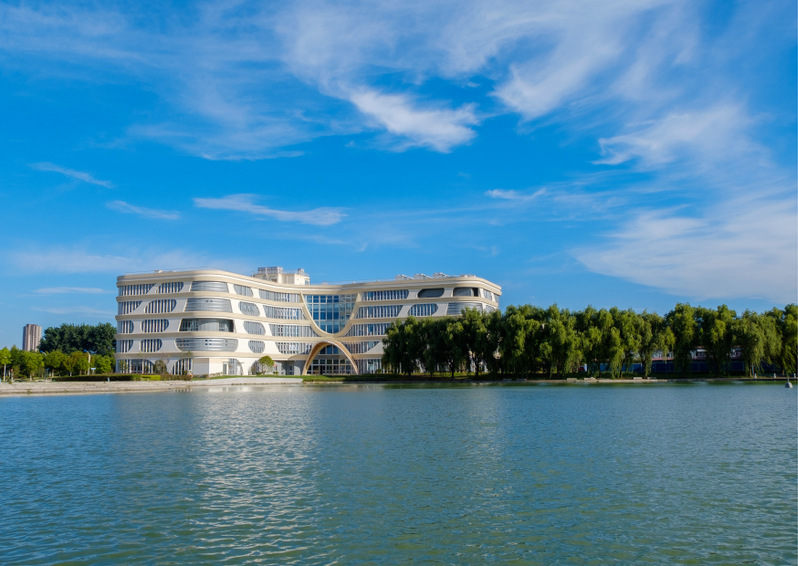
Guided by the philosophy of “putting students first and taking academics as the soul” SUIBE holds the motto “Integrity, Tolerance, Erudition, and Dedication”, and has consistently advanced in step with China’s opening-up.. The university currently operates three campuses in Songjiang, Changning, and Minhang, covering a total area of approximately
Committed to fostering talent for the Communist Party of China (CPC) and the Chinese nation, SUIBE has developed distinctive strengths in talent cultivation. Upholding the fundamental mission of fostering virtue through education, and serving development strategies of Shanghai and China at large, the university has deepened reforms in talent development. Focusing on international business and trade, international finance, and the digital economy, it is dedicated to cultivating outstanding professionals for the new era who possess solid academic foundations, strong practical and innovative capabilities, cross-cultural competence, global vision, patriotism, and both scientific and humanistic literacy.
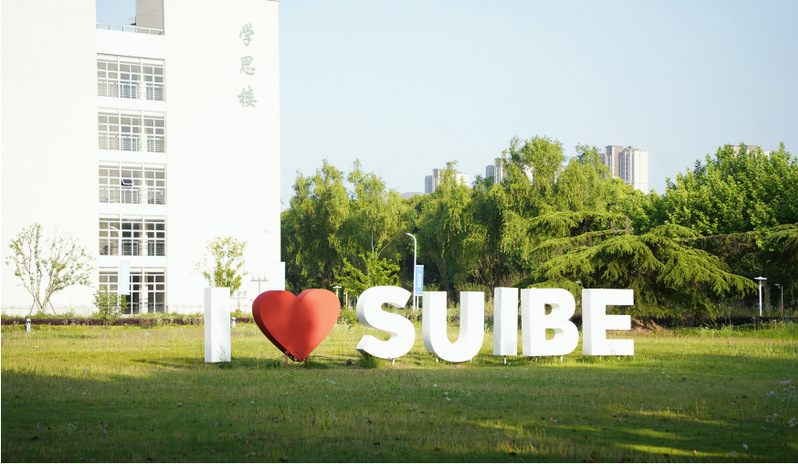
SUIBE places particular emphasis on fields such as innovation and governance in international business and trade, international finance and investment, and digital management and intelligent decision-making. It has developed a distinctive “New Four-Competency Talent” training model, which emphasizes proficiency in foreign languages for communication and negotiation (universal language), a strong command of international economic and trade rules (universal rules), sustainable development management concepts along with cross-cultural teamwork and leadership capabilities (universal management capabilities), and mastery of big data technologies and AI tools (universal tools).
The university has also improved its talent cultivation mechanisms by establishing an integrated system that links social demand, student recruitment, education and training, and employment. The university has established a comprehensive talent development mechanism integrating market demand, student recruitment, education and training, and employment. It has reinforced its talent cultivation platforms and has been recognized by the Ministry of Education as a “National Model University for Innovation and Entrepreneurship”, an “Innovative Practice Base for High-Level International Talent Cultivation”, a “National Base for the Inheritance of Excellent Traditional Chinese Culture in Ordinary Higher Education Institutions”, and a “Collaborative Innovation Training Base for Foreign-Related Legal Talents (Cultivation)”. It has also been designated as a “Shanghai Foreign-Related Legal Talent Education and Training Base”, a research base for “Comprehensive Law-Based Governance in Shanghai, specifically the Foreign-Related Legal Studies”, an “A-Level University Entrepreneurship Guidance Station” in Shanghai, a “Shanghai Demonstration Base for Graduate Employment and Entrepreneurship”, a “Shanghai Municipal Innovation and Entrepreneurship College Construction Unit”, a member of the “Shanghai Higher Education Institution Marxism Research Institute”, and a “Shanghai Higher Education Institution Characteristic Marxism College”.
To enrich its talent cultivation resources, SUIBE offers 37 undergraduate programs, including 16 national first-class undergraduate program construction sites, as well as 18 national first-class undergraduate courses. The university has also undertaken a wide range of municipal-level educational and teaching initiatives, including Shanghai first-class undergraduate courses, Shanghai higher education first-class undergraduate leading construction projects, pilot programs for the comprehensive reform of the “fostering virtue through education mechanism, Shanghai leading colleges for curriculum-based political and ideological education, and Shanghai municipal key modern industrial colleges.
It has received the Gold Certification from the Business Graduates Association (BGA) in the UK. Its programs in Finance, International Economics and Trade, among others, have obtained international accreditation from the European Foundation for Management Development (EFMD). Additionally, its Tourism Management program has received the UN Tourism TedQual Certification.
Driven by a commitment to excellence, SUIBE has achieved remarkable progress in discipline development. Aiming to build first-class disciplines, it has established a multidisciplinary framework led by the strengths of Applied Economics and Statistics distinguished by a discipline cluster in open economy, and supported by the coordinated development of Economics, Management, Law, Literature, Science, Engineering, Area Studies, and Education.
SUIBE offers doctoral degree programs in the first-level disciplines of Applied Economics and Statistics, encompassing 10 second-level doctoral disciplines, as well as a postdoctoral research station in Applied Economics. It has established master’s degree programs in 8 first-level disciplines, including Applied Economics, Business Administration, Law, Foreign Languages and Literature, Theoretical Economics, Statistics, Marxist Theory, and Regional and Country Studies. In addition, it provides 18 categories of professional master’s degree programs, such as Law, Business Administration, International Business, Accounting, Translation and Interpreting, Finance, Applied Statistics, Journalism and Communication, Public Administration, Tourism Management, International Chinese Language Education, Taxation, Digital Economy, Intellectual Property, International Affairs, and Auditing.
SUIBE has achieved significant progress in disciplinary development, with a marked enhancement in research capacity. It has received record numbers of national-level research projects, won provincial and ministerial awards such as the Ministry of Education’s Humanities and Social Sciences Awards and the Shanghai Outstanding Achievement Awards in Philosophy and Social Sciences, and published high-level papers in top-tier journals, including Social Sciences in China, Economic Research Journal, Management World, and the Journal of Development Economics.
SUIBE is committed to serving the Party and contributing to national policymaking. It advances think tank development with a strong sense of mission. It has a long-standing tradition and deep expertise in policy advisory services. Distinguished scholars, represented by Qiu Shaoheng, Wang Yaotian, Wang Xinkui, and Zhou Hanmin have made outstanding contributions to landmark national initiatives and reform milestones, including the drafting of the Hong Kong Basic Law, China’s negotiations on resuming its status in the GATT and accession to the WTO, the development and opening-up of Pudong, and the establishment of the China (Shanghai) Pilot Free Trade Zone.
SUIBE has achieved remarkable results in developing a new type of university think tank with Chinese characteristics. It has jointly established the Global Trade Monitoring and Analysis Center (Shanghai) with the General Administration of Customs (GAC) and is building the Institute of International Economic and Trade Innovation and Governance (Think Tank Center) with the support of the Ministry of Commerce and the Shanghai Municipal Government. With a focus on interdisciplinary research, it is also advancing the development of the Institute of Global Governance and International Development.
SUIBE has been selected as a key think tank in Shanghai, a decision-making consultation research base of the Shanghai Municipal People’s Government, the No. 001 Policy Advisory Consultation Research Base of the Shanghai Municipal Working Committee of Education and Health, and a core think tank of the China International Development Cooperation Agency, among other high-level platforms. The University is home to one nationally recognized “A-Zone university think tank” and four Shanghai university think tanks.
SUIBE has produced a series of influential research outcomes, including The Blue Book on China Pilot Free Trade Zones, China Strategic Commodity Development Report, and the China-Africa Investment Index. It has achieved notable results in research on institutional opening-up, WTO reform, the China International Import Expo (CIIE), China-U.S. economic and trade relations, cross-border data flows, and the enhancement of Shanghai’s role as an international trade and financial center. Its multiple policy advisory reports have been adopted by the State Council and central government ministries, while its decision-making consultation research performance has ranked among the top universities in Shanghai for consecutive years, placing first among Shanghai’s municipally administered universities.
SUIBE is committed to serving scientific development and cultivating talents for industries, actively contributing to China’s broader development agenda. Playing an active role in China’s high-level opening-up, the university supports national strategies, including the goals of building a strong trading nation, developing Shanghai into “Five Centers” and promoting integration in the Yangtze River Delta. It has strengthened practical cooperation with the Ministry of Commerce, General Administration of Customs, and the National Data Administration, while establishing multifaceted partnerships with Shanghai municipal agencies and districts, including the Shanghai Municipal Commission of Commerce, the Shanghai Science and Technology Commission, the Shanghai Intellectual Property Administration, the Legislative Affairs Commission of the Shanghai Municipal People’s Congress, the Lingang Special Area Administration Committee, and the governments of Songjiang, Qingpu, Changning, and Hongkou districts. It also deepens strategic collaboration with the commerce departments of provincial level regions including Anhui, Fujian, Hunan, and Guangxi, as well as the municipal governments of Suzhou, Wuhu, Anqing, and Tongling.
SUIBE has successively hosted a series of sub-forums for the Hongqiao International Economic Forum at the CIIE and, under the commission of the Ministry of Commerce, has been the exclusive provider of interpretation services for the China Pavilion at the exhibition for consecutive years. The university is building a collaborative platform under the China-SCO Local Economic and Trade Cooperation Demonstration Zone. It has partnered with the Songjiang District Government to co-establish the Global Trade Monitoring & Analysis Center under the G60 Science and Technology Innovation Corridor, as well as the Songjiang Experimental School Affiliated to SUIBE. It also works closely with leading enterprises to co-establish the School of Digital Finance Industry, the School of New Types of Trade Industry, and the Research Institute of Dual Circulation and Unified National Market; and has launched the Branch for New Quality Productive Forces and Industry-Education Integration under the Chinese Creativity Society.
SUIBE actively participates in Shanghai’s educational pairing assistance and exchange programs, engages deeply in Shanghai–Kashi cooperation, and has co-established with Kashi University one of the first Teacher Education Bases on National Conditions for Shanghai Universities in the New Era.
SUIBE focuses on improving quality and efficiency while advancing inbound and outbound engagement, providing strong support for the opening-up of the education sector. It has established partnerships with 168 overseas universities and international organizations across 48 countries and regions, and jointly conducts talent cultivation programs with world-renowned institutions such as the University of Wisconsin-Madison, Colorado State University, and RMIT University. As a host institution for recipients of the Chinese Government Scholarship, the Shanghai Government Scholarship for Foreign Students, and the International Chinese Language Teachers Scholarship, the university enrolls degree-seeking students from nearly 50 countries, thereby enhancing the quality of its international student cultivation.
SUIBE actively supports China’s major-country diplomacy. The university operates two Confucius Institutes and one Confucius Classroom in Central and Eastern Europe, making it the Shanghai municipally administered university with the largest number of Confucius Institutes in the region. The Confucius Institute jointly established with the University of Ljubljana has been recognized as a Globally Advanced Confucius Institute.
SUIBE actively engages with international organizations such as the WTO, APEC, and the United Nations Conference on Trade and Development (UNCTAD), establishing a research network on global economic governance. It also coordinates the cultivation of urgently needed talent in areas including export control, international finance, foreign-related legal affairs, and international organizations, providing both human resources and intellectual support for China’s active participation in global economic governance and the formulation of Chinese solutions. It explores new avenues for cultivating young talent in global governance and international volunteer service, organizing student study visits to world-leading institutions such as the University of Oxford and WTO headquarters. A number of SUIBE students have been selected for the Chinese Youth Volunteer Overseas Service Program—Volunteer Program Serving UN Agencies.
Mountains and seas may lie ahead, yet the pursuit of dreams knows no distance; though the road ahead is long, we press forward with confidence and determination. On the new journey, SUIBE remains guided by Xi Jinping Thought on Socialism with Chinese Characteristics for a New Era. It is committed to the strategic goal of building a world-renowned, top-tier, and distinctively characterized high-level university of finance and economics. With a service-oriented and contribution-driven approach, it concentrates on strengthening its distinctive advantages in foreign affairs, economics, and trade studies. Through comprehensive reform and an accelerated pace of high-quality development, it is enhancing its capacity to contribute to the building of a strong trading nation, a strong education nation, and Shanghai’s “Five Centers”. It strives to make its unique contribution to building a strong modern country and advancing national rejuvenation on all fronts through Chinese modernization.
(Data updated as of May 2026)

Copyright©2020 Shanghai Institute of Foreign Trade
NO.1900 Wenxiang Road, Songjiang District, Shanghai. China 201620